May 17, 2026 • Thiên-Anh Roussel • 9 min reading time • Prices verified June 18, 2026
Tin-Lined vs Nonstick Copper Canelé Molds: The Trade-Off Every Bordeaux Baker Faces
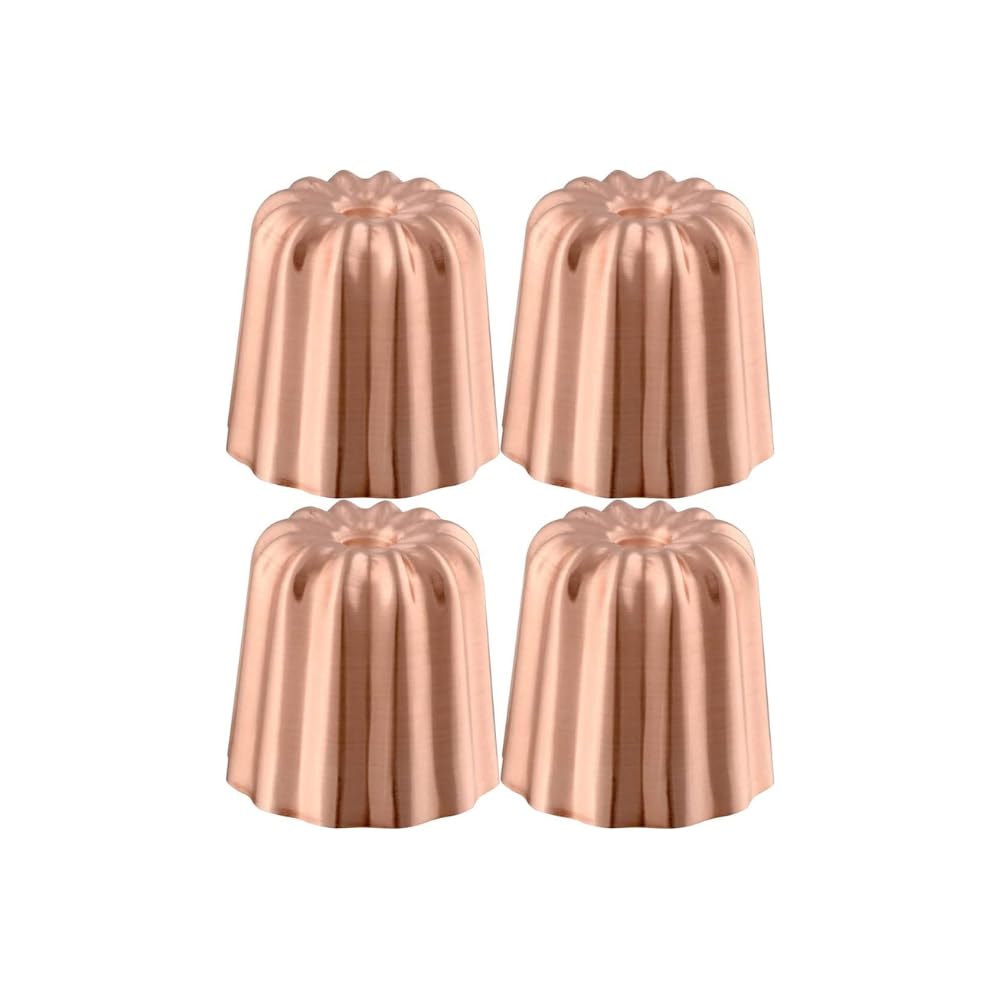
If you’ve ever bitten through the lacquered mahogany shell of a proper canelé — that small, fluted French pastry from Bordeaux with the custardy rum-and-vanilla interior — you already know why bakers obsess over the mold. A canelé (pronounced can-eh-LAY) is essentially a heat-management puzzle wrapped in beeswax and butter. The crust needs to reach a temperature high enough to caramelize deeply without burning, while the center stays yielding and soft. The mold you bake it in isn’t just a vessel; it’s an active participant in that thermal negotiation. Copper conducts heat faster and more evenly than almost any other kitchen material, which is why the traditional Bordelais mold has always been made from it. But today’s copper molds come in two interior finishes: the old-school tin lining and a modern nonstick coating. This article breaks down exactly what each finish does, where each one wins, and which to buy depending on how seriously you’re pursuing the bake.
| EDITOR'S PICK[Patisse Set of 3 Copper Fluted…](https://www.amazon.com/dp/B00HID7W3K?tag=greenflower20-20) | Mid-tier[Matfer Bourgeat Cannelé Copper…](https://www.amazon.com/dp/B003AILZ9E?tag=greenflower20-20) | Budget pick[The Love 12-Cavity Nonstick Can…](https://www.amazon.com/dp/B087CW7NLQ?tag=greenflower20-20) | |
|---|---|---|---|
| Interior coating | — | Tin-lined | Nonstick |
| Cavities | 3 | 1 | 12 |
| Dimensions | 17.5×6×6 cm | 2.19×2.19 in | — |
| Material | Copper | Copper | — |
| Price | $94.01 | $55.00 | $22.79 |
| See on Amazon → | See on Amazon → | See on Amazon → |
What the Interior Lining Actually Does
The copper shell of a canelé mold does the heavy thermal lifting — it absorbs oven heat quickly and distributes it with unusual uniformity around the fluted cylinder. The interior lining, however, controls two distinct things: how heat is transferred at the point of contact with the batter, and how easily the finished canelé releases.
Tin is the traditional choice and has lined copper bakeware for centuries. It’s a soft, relatively low-melting metal (pure tin melts around 450°F / 232°C) applied in a thin layer by hand-tinning craftspeople or, in industrial production, by dipping. In a canelé context, tin provides a moderately nonstick surface when properly seasoned — that is, when the mold has been conditioned with beeswax or a beeswax-butter mixture that fills the microscopic pores of the tin surface before each bake. Without that seasoning ritual, tin is actually quite sticky.
Nonstick coatings in this context typically means PTFE-based layers bonded to the copper interior. The marketing proposition is obvious: skip the beeswax prep, get reliable release, reduce the learning curve. Several contemporary copper mold makers — and a number of manufacturers who plate copper over aluminum — offer this finish. Mauviel’s product documentation for their copper bakeware lines distinguishes clearly between tin-lined and their treated-surface alternatives, and the trade-offs they describe align closely with what professional pastry operators report in long-run use.
The Comparison: Three Baker Profiles, Three Verdicts
The tin-versus-nonstick decision maps cleanly onto baker profile rather than budget. Below, three distinct practitioner tiers each get a direct verdict so you can locate yourself in the comparison and skip straight to what applies.
The Committed Practitioner: Weekly Bakes, Crust Quality Is the Point
For bakers who approach the canelé as a craft project — baking once a week or more, tracking crust color across cycles, reading Stella Parks’ canelé guide on Serious Eats and treating it as a technical manual — tin-lined copper is the correct answer. Parks articulates something that repeated practitioner experience confirms: the beeswax-tin interface creates a micro-thin caramelized layer between batter and mold that contributes directly to the crust’s characteristic sheen and depth of color. It’s not simply a release agent; it’s a functional ingredient in the final crust.
Operators in long-run reviews consistently report that tin-lined copper molds, once properly seasoned and broken in over a dozen or more bake cycles, produce a crust character that nonstick molds struggle to replicate. The caramelization at the mold wall is more aggressive, the color deeper, and the exterior texture drier and more lacquer-like. Food52’s feature on copper canelé molds quotes experienced home bakers reporting that “after about twenty bakes, the tin develops a patina that makes release almost effortless and the crust extraordinary.” The craft ceiling is higher, and the longevity is indefinite — tin can be re-lined by a specialist coppersmith when it wears, making your mold investment effectively permanent.
The trade-offs you accept: a 15–20 minute beeswax prep ritual before every single bake, a temperature ceiling of roughly 400–425°F (204–218°C) for the tin lining, and a learning curve of ten or more bakes before the mold performs at its best. The temperature ceiling deserves emphasis — most authentic Bordelais recipes call for an initial blast at 450–500°F (232–260°C) to set the crust before dropping heat. Saveur’s feature “The Canelé de Bordeaux” notes that professional pastry kitchens manage this through a two-stage oven sequence that keeps time at maximum heat brief enough to stay within the tin’s safe operating range. If you’re unwilling to calibrate your oven protocol around that ceiling, tin creates unnecessary risk of lining degradation.
Budget for this tier: $160–$240 for a set of eight from Mauviel or Matfer Bourgeat, purchased from an authorized dealer.
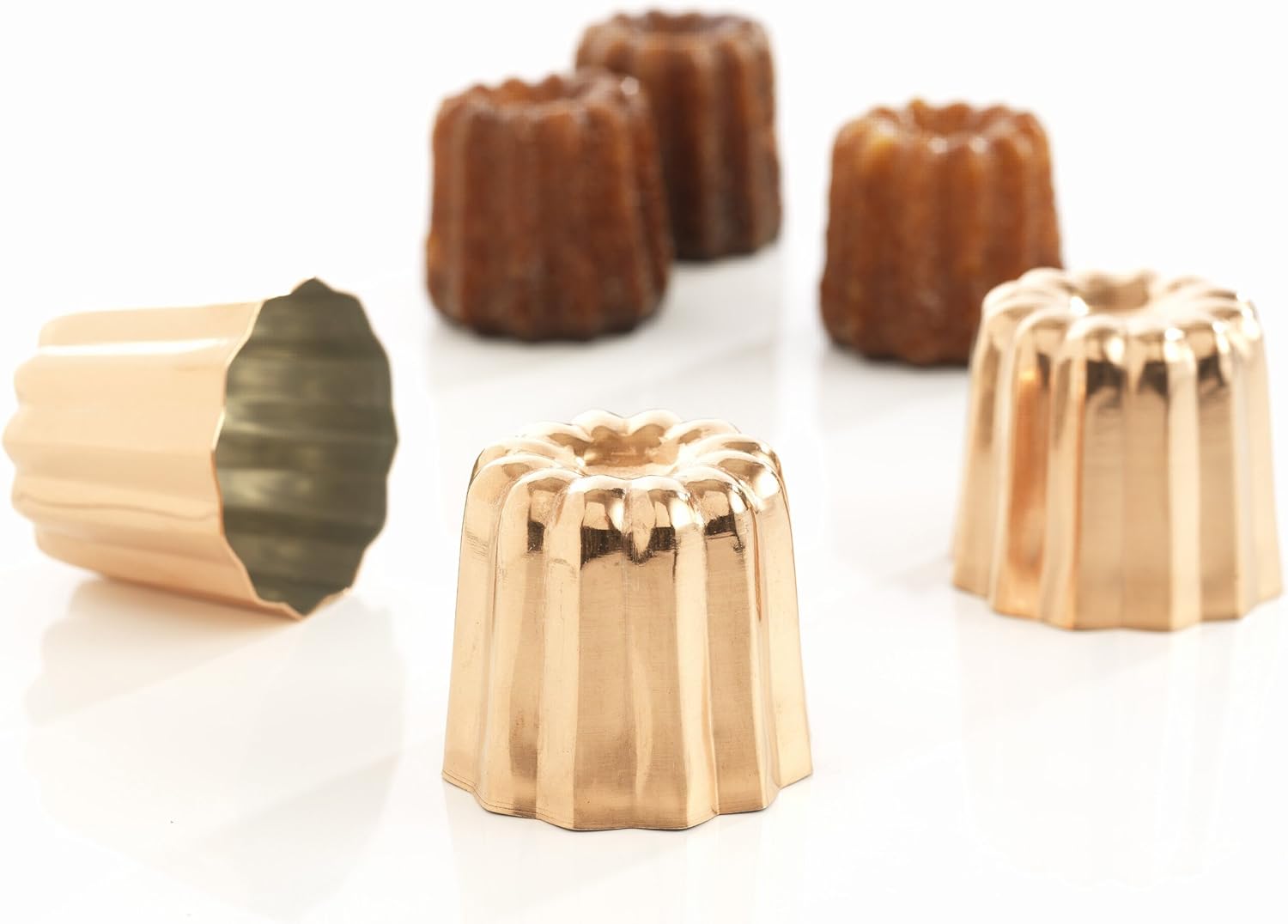
Patisse
$94.01
In stock on Amazon
Check price on AmazonThe Occasional Baker: Monthly or Less, Reliability Over Refinement
For bakers who bake canelés once a month or less — perhaps for a dinner-party project, a seasonal menu rotation, or as part of a broader French pastry practice that doesn’t center the canelé — nonstick-lined copper solves real problems that tin creates. Cook’s Illustrated’ equipment roundup “Testing Canelé Molds” found that novice and intermediate bakers who tested both finishes reported significantly higher first-attempt success rates with nonstick-lined molds. The beeswax conditioning cycle presents a meaningful obstacle when it’s performed infrequently: beeswax has a shelf life, requires a specific application temperature, and can go wrong in ways (pooling at the base, uneven coating) that ruin a bake before the oven is even on.
Nonstick interiors on properly manufactured copper molds are generally rated to 450–500°F (232–260°C), which aligns with aggressive crust-setting protocols without requiring temperature management around a tin ceiling. The trade-off is crust character: across practitioner reviews tracked in publications including Saveur and Food52, the consensus is consistent — nonstick interiors produce a crust that releases cleanly and reliably but lacks the deepest caramelization register. The difference is subtle at the beginner stage and becomes more noticeable as your palate for the bake develops.
Nonstick coatings also degrade with metal tools and abrasive cleaning. With careful handling, nonstick copper molds typically last four to seven years of regular use before showing meaningful degradation. At that point they become a replacement cost rather than a permanent asset. For a baker in this tier who may bake 30–40 batches per year, four to seven years of reliable performance represents a sound value proposition.
Budget for this tier: $180–$260 for a set of eight; confirm solid copper construction rather than copper-plated aluminum (more on this below).
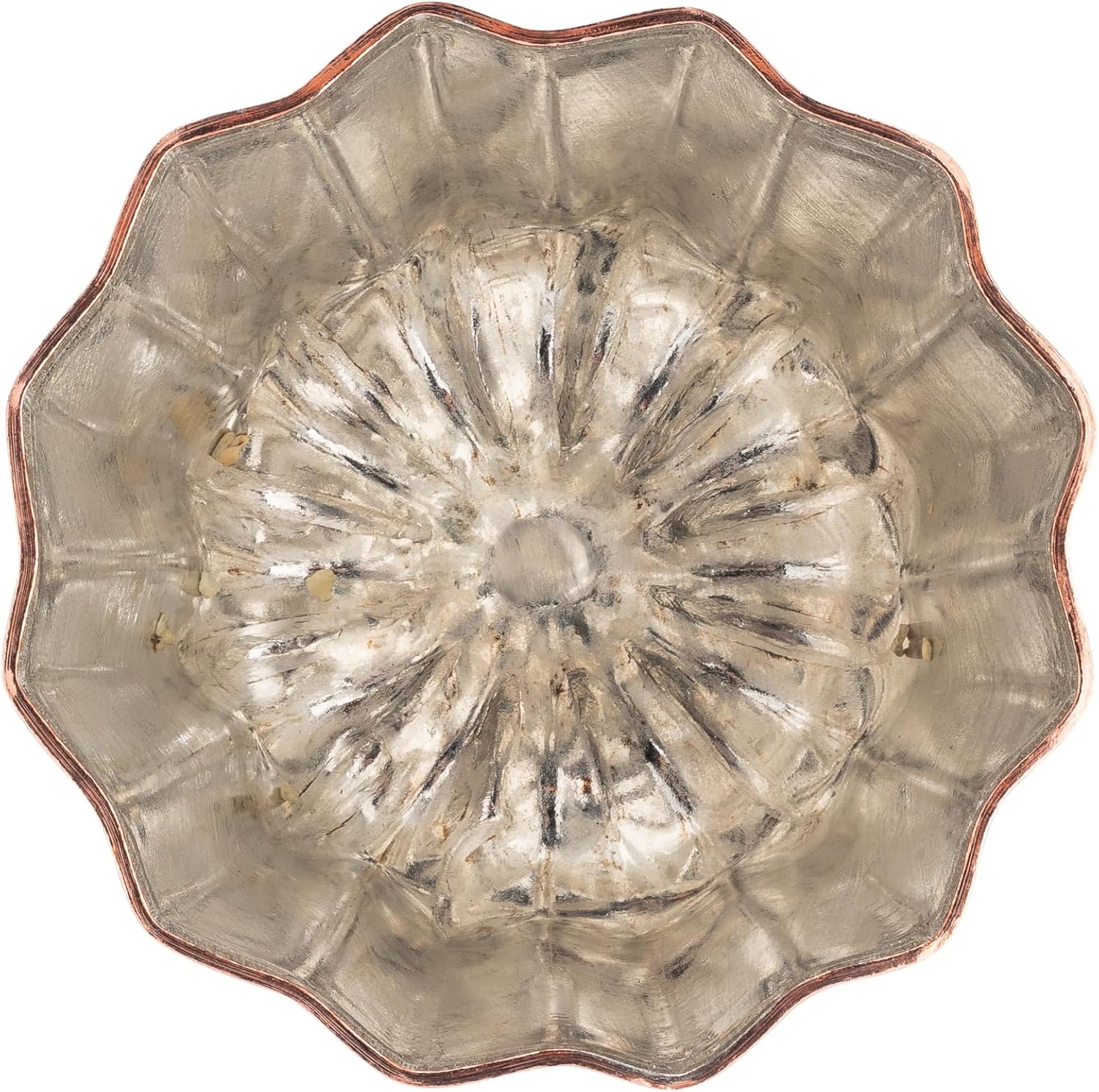
Matfer
$55.00
In stock on Amazon
Check price on AmazonThe Prosumer or Small Operator: High Volume, Both Finishes Earn Their Place
For private-dining operators, small patisserie owners, or serious home bakers running regular service, the most practical answer is owning both finishes. Food52’s copper bakeware coverage describes exactly this approach: tin-lined molds for showcase bakes — dinner-party service, sale product where crust character is the value proposition — and a nonstick set for high-volume prep days when throughput matters more than the last 10% of crust quality.
At this tier, tin-lined molds represent the better long-run economics, provided you commit to the beeswax protocol. The ability to re-tin means capital investment in the molds is effectively permanent. Nonstick molds, by contrast, become a recurring replacement cost at the four-to-seven-year mark — a factor worth building into equipment budgets. Mauviel’s product documentation for the M’Passion copper bakeware line specifically addresses commercial use cycles and distinguishes their solid copper construction from plated alternatives in terms of thermal performance and lifespan under professional conditions.
Budget for this tier: $320–$500 for a mixed set of eight tin and eight nonstick from authorized commercial suppliers; lifecycle cost favors tin on a five-year horizon.
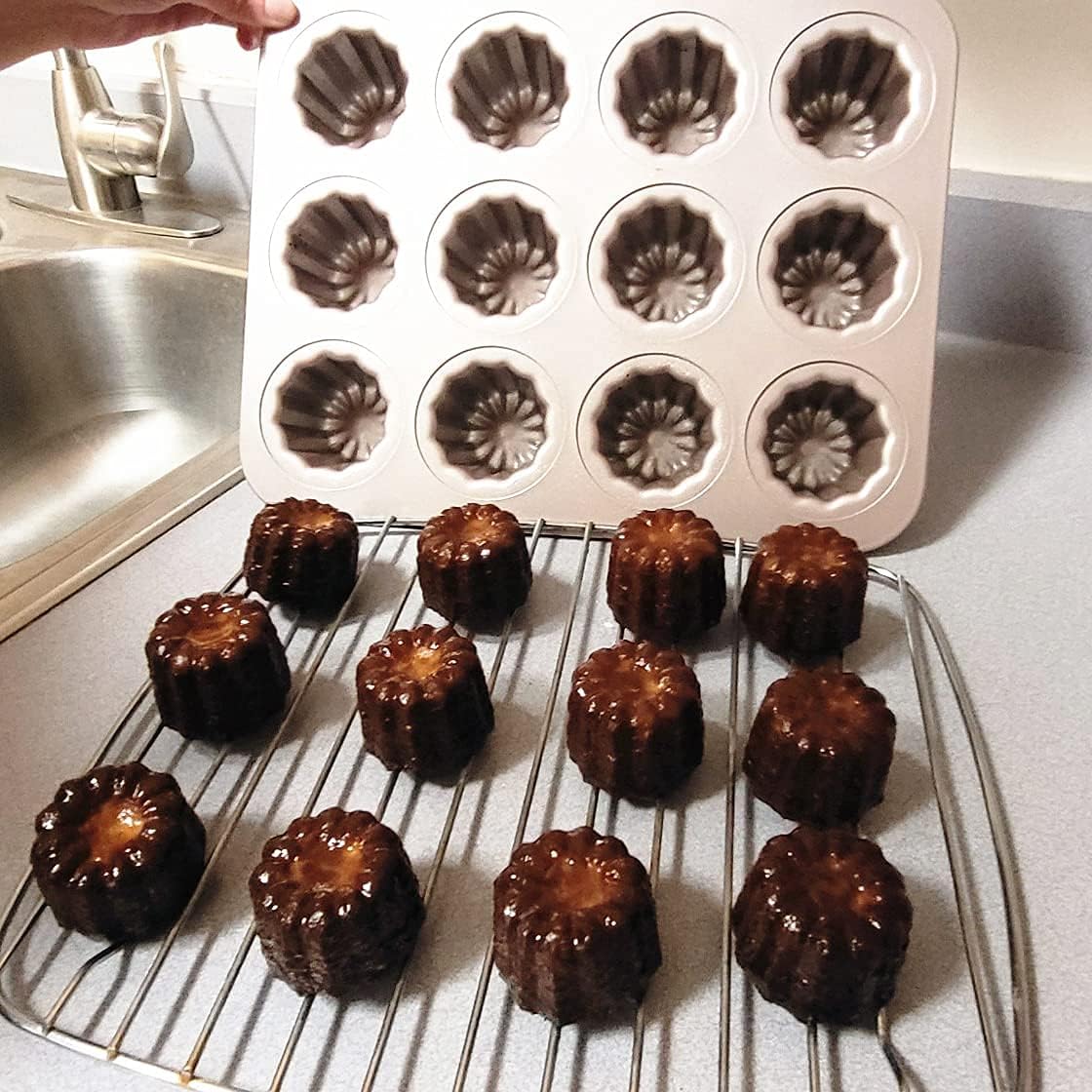
The
$22.79
In stock on Amazon
Check price on AmazonThe Numbers Side by Side
| Feature | Tin-Lined Copper | Nonstick Copper |
|---|---|---|
| Typical price (set of 8) | $160–$240 | $180–$260 |
| Max recommended temp | ~400–425°F | ~450–500°F |
| Prep time per bake | 15–20 min (beeswax) | ~2 min (butter brush) |
| Lifespan with care | Indefinite (re-tinnable) | 4–7 years typical |
| Crust character | Deepest caramelization | Clean release, lighter crust |
| Learning curve | High (10+ bake break-in) | Low to moderate |
Sourcing, Authenticity, and What to Watch For
The canelé mold market has a counterfeiting problem that mirrors the broader copper bakeware category. Mauviel and Matfer Bourgeat are the two most consistently cited professional-grade sources for solid copper canelé molds; both maintain authorized dealer networks in the United States and Europe. Purchasing outside those channels — including certain third-party marketplace listings and gray-market importers — risks receiving plated aluminum molds sold as solid copper, or tin-lined molds where the lining has been applied with insufficient thickness.
The thermal stakes here are real. Copper’s thermal conductivity runs roughly 400 W/m·K; aluminum is approximately 205 W/m·K. The faster, more uniform heat transfer of genuine solid copper affects crust set in ways that aluminum-core molds cannot replicate, regardless of exterior color or labeling. Saveur’s feature “The Canelé de Bordeaux” recommends purchasing from specialty culinary retailers with verifiable supply chains; Williams Sonoma, Sur La Table, and directly from manufacturer-authorized importers are the channels most consistently cited as reliable as of 2026.
The practical authentication check: a genuine solid copper mold of standard size (approximately 55mm diameter, 45mm height) should weigh roughly 90–110 grams per mold. Molds that feel unexpectedly light are almost certainly not solid copper, regardless of color or labeling.
One additional consideration for anyone at the practitioner or operator tier: confirm that re-tinning services are accessible in your region before committing heavily to tin-lined molds. A handful of specialized coppersmiths in the United States offer this service; European buyers have more options. The re-tinning cost runs $15–$30 per mold at current rates, which pencils out favorably against replacement costs after the first decade of serious use.
The Decision in Plain Terms
The canelé does not forgive compromise on heat or technique, but it rewards bakers who understand the equipment they’re working with. Whichever lining you choose:
- Buy solid copper from a verified source. Color is not authentication.
- Season or prep the mold correctly before every single bake, not just the first.
- Give yourself twenty bake cycles before you judge what the mold can actually do.
The tin-versus-nonstick choice is ultimately a question of commitment level rather than correctness. Tin is not better than nonstick for a baker who bakes once a month and skips the beeswax prep because it feels like too much. Nonstick is not a shortcut for a practitioner who has developed a palate for the deepest crust register tin can produce. Know which baker you are before you buy, and the mold will meet you there.