May 28, 2026 • Thiên-Anh Roussel • 9 min reading time • Prices verified June 18, 2026
Made in France, Baked with Confidence: Emile Henry and Made In Cookware Compared
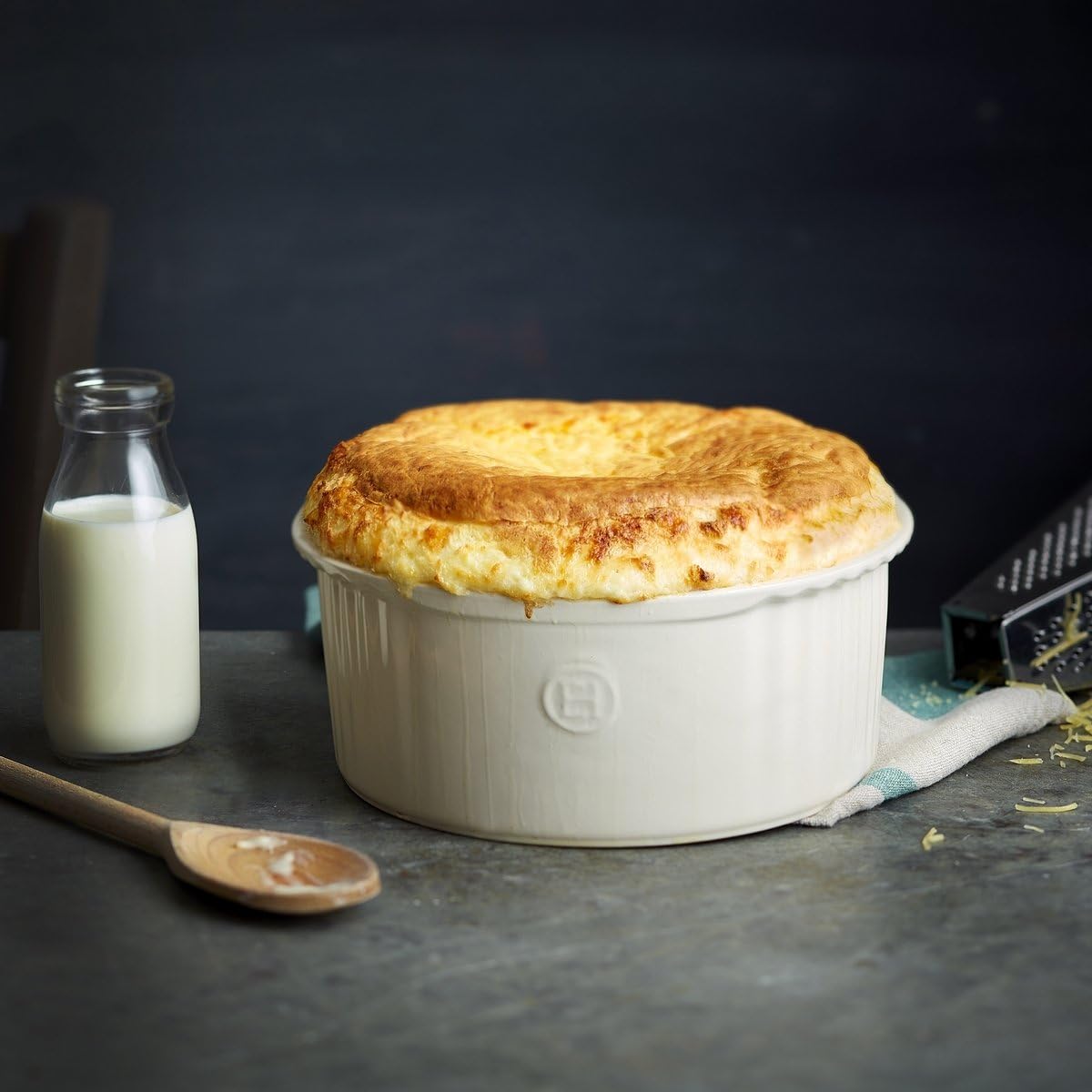
If you’ve been shopping for soufflé dishes or ceramic baking vessels recently, two brand names appear more than any others: Emile Henry and Made In Cookware. Both lean hard into French heritage in their marketing, both sit in the $60–$150 price range that signals “serious but not absurd,” and both attract genuinely enthusiastic home bakers. But they are not the same thing, and the difference matters more than most buying guides admit. This article is a side-by-side comparison built around one question: given what you actually bake, which brand’s bakeware earns a permanent spot in your kitchen? Below we explain the materials, trace the manufacturing claims honestly, and give you a clear decision rule at the end — organized around three profiles that map to different kitchens and different budgets.
| EDITOR'S PICK[Made In Cookware - Baking Slab](https://www.amazon.com/dp/B09S6QZD1X?tag=greenflower20-20)… | Mid-tierEmile Henry 13" x 9" Large Rect… | Budget pickEmile Henry 11" x 8" Medium Rec… | |
|---|---|---|---|
| Dimensions | — | 13" x 9" | 11" x 8" |
| Material | French Porcelain | — | — |
| Origin | Crafted in France | — | — |
| Color | Navy Rim | Sugar | Twilight Blue |
| Collection | — | Modern Classics | Modern Classics |
| Price | $119.00 | $84.95 | $64.95 |
| See on Amazon → | See on Amazon → | See on Amazon → |
What Each Brand Actually Is — and Where the “French” Story Comes From
The “Made in France” claim is genuinely load-bearing here, so it’s worth unpacking before anything else.
Emile Henry is a family company founded in 1850 in Marcigny, in the Burgundy region of France — the same town, the same family lineage, still manufacturing there today. Their core material is Burgundy clay, a high-fired ceramic (classified as flamed stoneware, marketed under the proprietary name Flame) that is quarried locally and fired at extremely high temperatures. The result is a dense, non-porous body with a glaze the company describes as resistant to crazing — the fine surface crackle that develops in lower-fired ceramics over years of thermal cycling. Per Emile Henry’s published product materials documentation, their dishes are rated oven-safe to 500°F (260°C) and listed as compatible with broiler use, freezer-to-oven transitions, and dishwasher cycles. Every piece carrying the Flame designation is manufactured in Marcigny. Epicurious, in their editorial overview “French Kitchen Equipment, Explained,” names Emile Henry as the reference-standard French ceramic brand for home kitchens, specifically citing the Burgundy clay body as the differentiating factor.
Made In Cookware is a younger brand, founded in 2017 in Austin, Texas. Their marketing emphasizes partnerships with family-owned factories in France and Italy, and their stainless and carbon steel cookware lines do manufacture in established French factories. Their bakeware line, however, is a different story. Made In’s ceramic bakeware — including their soufflé and gratin dishes — is manufactured in Portugal, not France, per the company’s own factory disclosure materials as of early 2026. Portugal has a deep ceramics tradition and the quality is real, but the provenance distinction matters if French origin is part of what you’re paying for. This is not a disqualifier for Made In — it’s simply information the comparison requires.
How the Two Materials Perform Inside an Oven
A soufflé is one of the most unforgiving tests of a baking vessel because it demands two things simultaneously: even, steady heat transfer to set the egg-white foam structure from the sides outward, and thermal inertia — the dish’s ability to hold temperature steady when the oven door opens. Uneven hot spots cause differential rise; a dish that bleeds heat too fast causes collapse at the critical juncture when the soufflé hits room-temperature air during the transfer from oven to table.
Emile Henry’s Flame stoneware is notably dense by ceramic standards. Food52, in their long-form editorial “Editors’ Picks: Bakeware Worth Keeping Forever,” documents that Emile Henry dishes take slightly longer to come up to temperature than thinner ceramics — the thermal mass is real — but once hot, they hold that heat through serving. The glaze shows minimal crazing even after years of heavy use and regular dishwasher cycling, which aligns with the high-fire production process. The straight-wall geometry on the standard soufflé dish (the classic ribbed design) is intentional: straight walls give rising batter an uninterrupted vertical surface to climb.
Made In’s ceramic bakeware is lighter in hand and comes up to temperature faster. Serious Eats, in their roundup “The Best Soufflé Dishes,” notes that Made In’s baking vessels heat quickly and deliver good browning on gratins and shallow bakes. For soufflés specifically, the faster heat response is a double-edged trait: you get quicker preheating (useful in a busy kitchen), but the lower thermal mass means less buffer against temperature drop during service. Made In’s bakeware line is newer and does not yet carry the decade-plus track record Emile Henry owners can report.
Three Buyer Profiles — and Which Brand Fits Each
The comparison between these two brands resolves most cleanly when you map it to who is actually buying. Below are three profiles with a direct recommendation for each.
Profile 1: The Long-Term Batterie Builder
You are building a curated set of kitchen equipment intended to last decades. You bake soufflés, braises, and gratins regularly — weekly, not seasonally. You run pieces through the dishwasher because that’s the reality of a working kitchen. You want to buy once and never revisit the decision.
For this profile, Emile Henry is the unambiguous recommendation.
The Kitchn, in their editorial guide “How to Choose Bakeware That Lasts,” explicitly names firing temperature as the key variable separating heirloom-grade ceramics from serviceable bakeware — and Emile Henry sits at the high-fire end of that spectrum. Food52’s bakeware editorial notes that once glaze crazing develops in lower-fired ceramics, microscopic fissures can harbor bacteria and further thermal stress accelerates degradation. High-fire ceramics like Emile Henry’s Burgundy clay resist this because vitrification — the glass-like fusion of clay particles — happens deeper through the material at higher kiln temperatures. The glaze and the clay body become, effectively, one material.
The $85–$95 price point for the 1.5-quart Grand Cru Soufflé Dish buys you something that plausibly outlives a $400 stand mixer. The cost-per-use math over a fifteen-year horizon is exceptionally favorable.
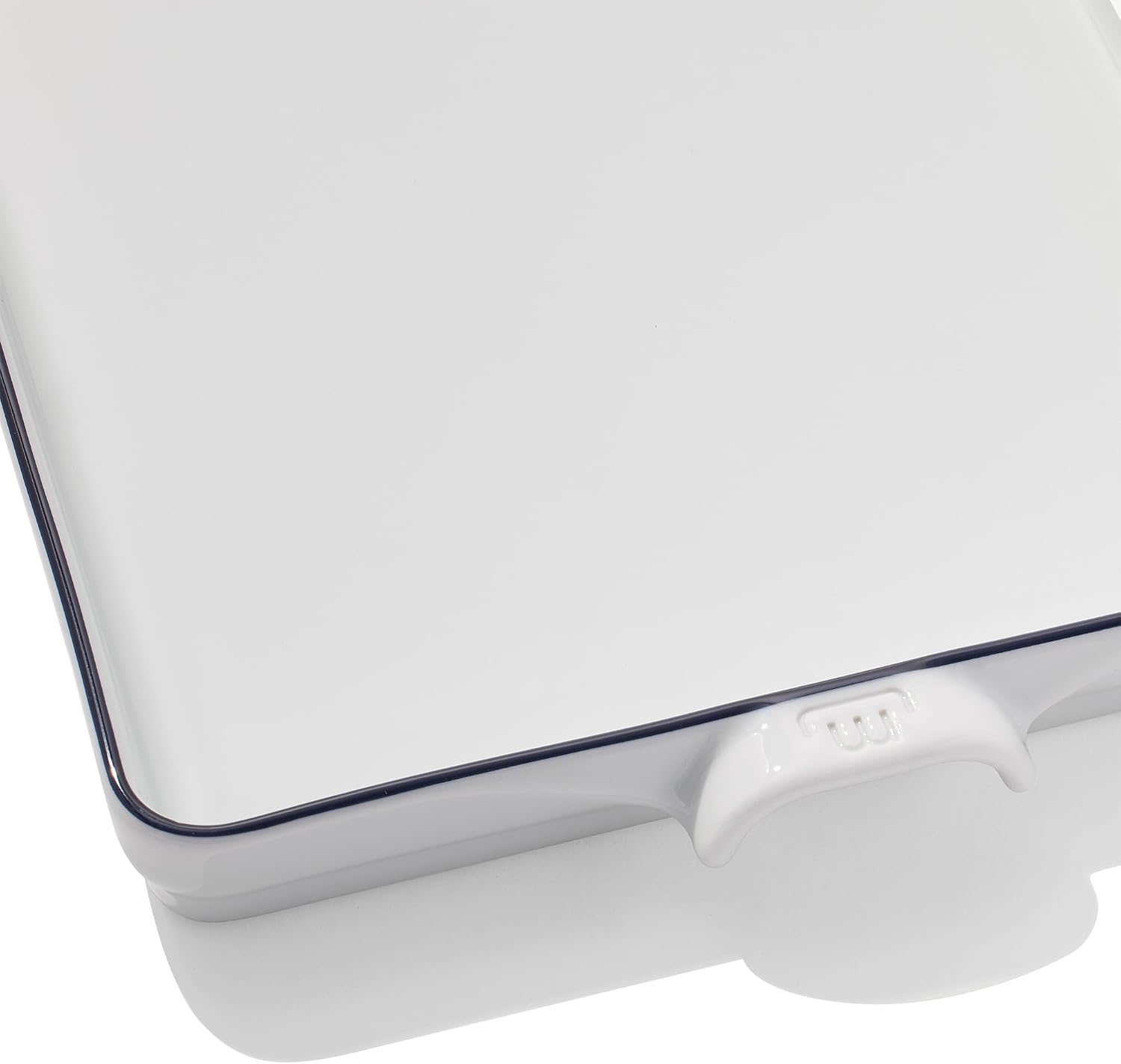
Made
$119.00
In stock on Amazon
Check price on AmazonProfile 2: The Practical Multi-Purchase Kitchen Equpper
You are furnishing a kitchen across multiple categories at once — bakeware, cookware, knives — and need to allocate budget intelligently. You bake soufflés occasionally, but gratins, roasted vegetables, and casseroles make up the majority of your oven use. You want serious quality without paying for provenance premiums you won’t fully use.
For this profile, Made In is a genuinely sound choice.
Made In sells primarily through their own website, which gives them tight direct-to-consumer control over distribution and sidesteps the gray-market and counterfeit issues that affect brands with broader wholesale footprints. If you order from Made In directly, the warranty is clean and unambiguous. The Portuguese stoneware quality is legitimate — it’s a different material proposition than Emile Henry, not an inferior one. For gratins and roasted dishes where faster heat response is actually an advantage, Made In’s lighter body can perform as well or better than the heavier Emile Henry vessel. The $70–$85 price point for a comparable 1.5-quart soufflé dish is a real savings that compounds across a multi-piece purchase.

Emile
$84.95
In stock on Amazon
Check price on AmazonProfile 3: The Provenance-Conscious Gifter or Host
You are purchasing specifically to give as a gift, or you are equipping a dinner party kitchen where the oven-to-table presentation of the vessel is part of the hospitality. French origin matters — either for its own sake, as a signal of a specific manufacturing tradition, or as a story the gift or table can tell.
For this profile, Emile Henry is the only fully honest choice.
Epicurious’s overview of French kitchen equipment identifies Emile Henry as the authentic reference for French ceramic bakeware in its price category. Serious Eats’ soufflé dish roundup names Emile Henry as the most visually authoritative option in the ceramic category, specifically citing the ribbed exterior — which references the classic French porcelain soufflé mold — as a design element that reads as intentional and correct to anyone who knows French table traditions. Made In’s ceramic bakeware aesthetic is cleaner and more contemporary: smooth exteriors, matte glazes, a design language closer to modern European tableware than classic French bistro. This is not worse, but it does not carry the same provenance signal.
Regarding authorized purchasing: Epicurious’s French kitchen equipment editorial notes that authorized Emile Henry dealers include Williams Sonoma and Sur La Table, among a select list of specialty retailers. Purchasing through those channels ensures a genuine piece with the manufacturer’s warranty intact — particularly relevant for a gift, where a gray-market piece is a real risk on broader marketplace platforms.
Made
$119.00
In stock on Amazon
Check price on AmazonBy the Numbers
| Feature | Emile Henry Grand Cru Soufflé Dish (1.5 qt) | Made In Stoneware Soufflé Dish (1.5 qt) |
|---|---|---|
| Price (2026) | $85–$95 | $70–$85 |
| Manufacturing origin | Marcigny, Burgundy, France | Portugal |
| Oven-safe rating | 500°F / broiler-safe | 500°F |
| Wall geometry | Straight, fluted exterior | Straight, smooth exterior |
| Dishwasher rated | Yes | Yes |
| Freeze-to-oven | Yes (per manufacturer) | Yes (per manufacturer) |
| Track record | 170+ years / Flame line ~decades | Brand est. 2017 |
| Recommended profile | Long-term / provenance-conscious | Practical multi-purchase |
Made
$119.00
In stock on Amazon
Check price on AmazonOven-to-Table Presentation: Why It’s a Performance Variable, Not Just Aesthetics
For anyone hosting dinner parties or running a private dining setup, the dish’s behavior at the table is a real performance variable — not merely decorative.
Emile Henry’s Grand Cru color palette (deep burgundy, midnight blue, charcoal, natural linen) is designed specifically for oven-to-table use. The fluted exterior references the classic French porcelain soufflé mold and reads as intentional and traditional to guests who know the form. Serious Eats’ soufflé dish editorial makes this point explicitly: the visual grammar of the Emile Henry dish communicates the dish’s purpose before the soufflé even lands on the table.
Made In’s presentation reads as intentionally sophisticated in a contemporary register — appropriate for a modernist or minimalist menu, less legible as a classic French service vessel. Neither grammar is wrong; they are different stories told through different forms.
The thermal dimension of presentation matters here too. Because Emile Henry’s higher thermal mass retains heat longer after the dish leaves the oven, guests at a large table have a slightly wider window before the soufflé registers the temperature drop. This is a real advantage in a hosting context, and it is baked into — so to speak — the material properties of the Burgundy clay body rather than any technique the cook can supply.
The Short Version
Neither of these brands is a mistake. Both make bakeware that rises to the occasion — in the most literal sense. The decision comes down to three variables: how long you intend to keep the piece, how much the “Made in France” designation matters to your purchase, and whether you’re optimizing for thermal mass or fast heat response.
If you are building for decades, choose Emile Henry. If you are equipping a practical kitchen across multiple budget priorities, Made In delivers genuine quality at a meaningful savings. If provenance is the point — for a gift, for a table, for a kitchen where French origin carries weight — only one brand delivers that claim fully across its baking line, and it is Emile Henry.
The good news is that a soufflé baked in either of these dishes will still be a soufflé worth making.